
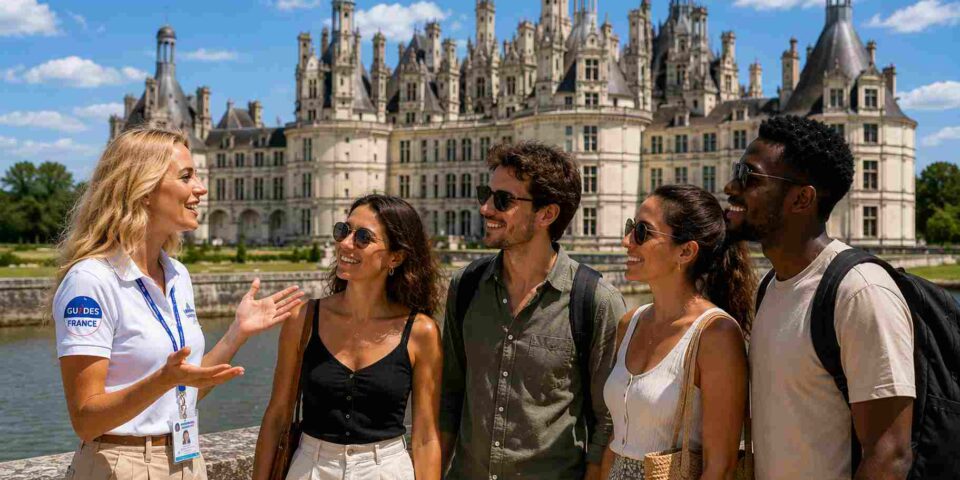
- Natalie S
- The best of France and its regions, Centre Val de Loire, Centre Val de Loire, Your guide: a committed professional
Visit Château de Chambord with a Private Tour Guide
Rising from the forests of the Loire Valley, Château de Chambord is the largest and most spectacular château in France. Built as a royal hunting lodge for King Francis I in the early 16th century, the château combines French Renaissance elegance with medieval fortress-inspired design. With its soaring towers, ornate chimneys, grand terraces, and famous double-helix staircase, Chambord is one of France’s most recognizable landmarks and a UNESCO World Heritage Site.
Exploring Chambord with a private guide allows you to discover much more than its impressive façade. Your guide will explain the ambitions of King Francis I, the influence of the Italian Renaissance, and the architectural innovations that continue to fascinate historians today. Rather than simply walking through magnificent rooms, you’ll gain insight into the political power, artistic vision, and royal lifestyle that shaped this extraordinary estate.
Inside the Castle
Stepping inside Château de Chambord reveals one of the most extraordinary royal residences of the French Renaissance. The château contains more than 400 rooms, 80 staircases, and over 280 fireplaces, reflecting the immense scale and ambition of King Francis I’s vision.
Although the king spent only a few weeks here throughout his reign, every part of the château was designed to impress visiting nobles and foreign ambassadors. The grand reception halls feature soaring vaulted ceilings, intricate stone carvings, monumental fireplaces, and elegant Renaissance details that showcase the craftsmanship of 16th-century French artisans.
The highlight of any visit is undoubtedly the double-helix staircase, an architectural masterpiece traditionally attributed to the influence of Leonardo da Vinci. Its ingenious design allows two people to ascend or descend simultaneously without ever crossing paths, making it one of the château’s most celebrated features. As you explore the upper floors, you’ll discover the restored royal apartments of Francis I and Louis XIV, richly decorated ceremonial rooms, historic hunting trophies, period furnishings, Flemish tapestries, paintings, and temporary exhibitions that bring the château’s history to life.
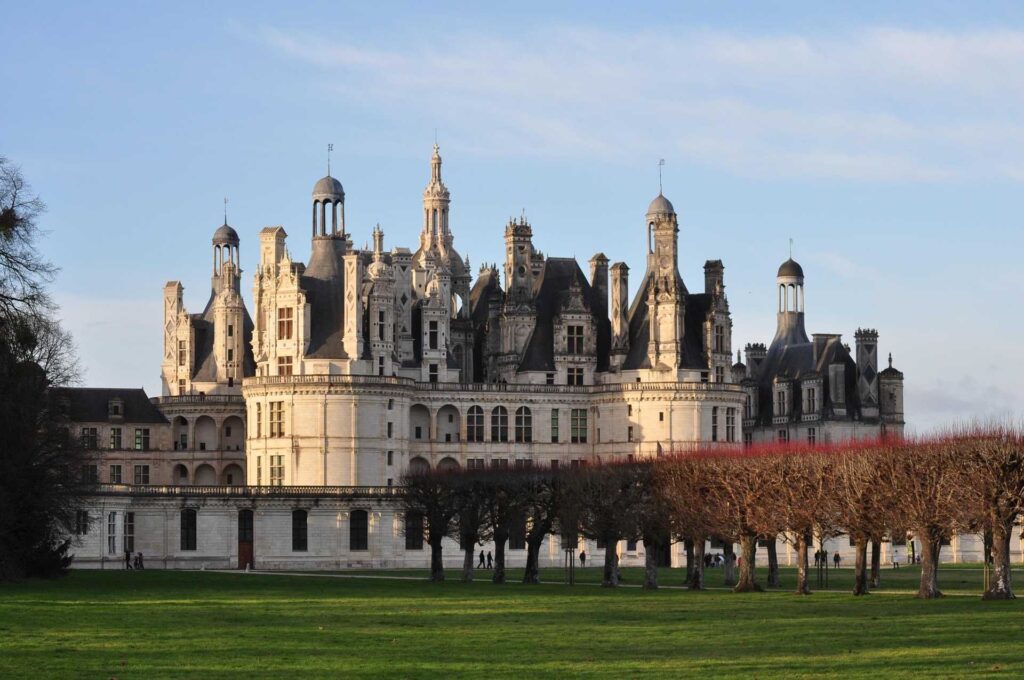
Climbing to the rooftop terraces rewards visitors with spectacular views of the famous lantern tower, ornate chimneys, sculpted dormer windows, and one of the most distinctive rooflines in all of Europe, often described as resembling the skyline of an entire miniature city.
Outside the Castle
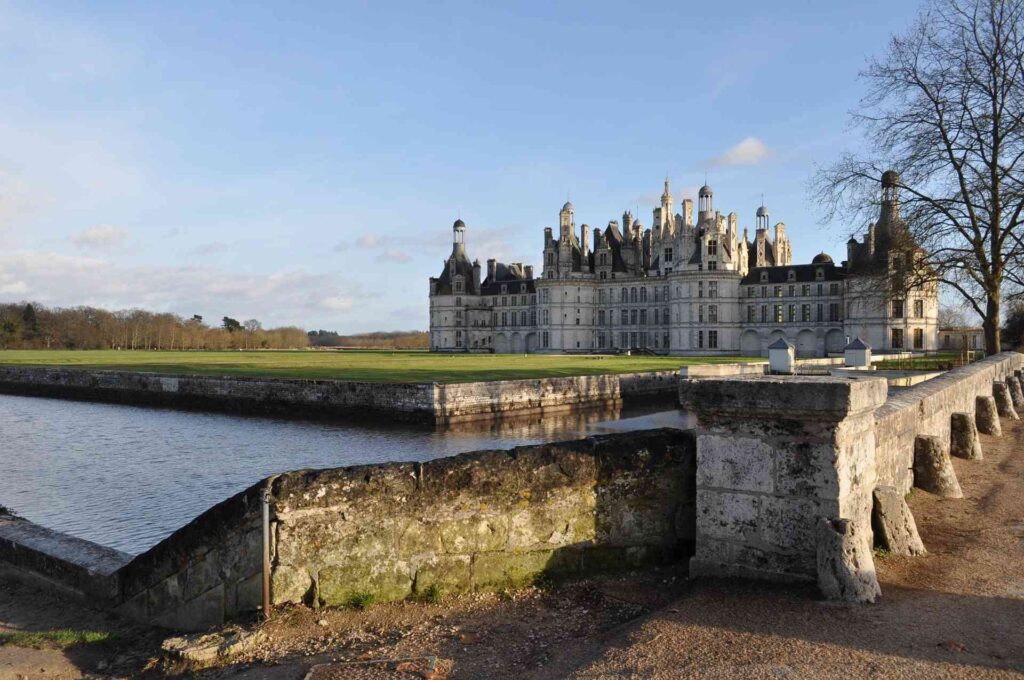
The grandeur of Chambord extends far beyond its magnificent architecture. Surrounding the château is a 5,440-hectare enclosed estate, making it the largest walled park in Europe and nearly the size of central Paris. Protected by a 32-kilometre stone wall, the estate was originally created as an exclusive royal hunting reserve and remains one of France’s most important wildlife sanctuaries.
Today, visitors can encounter red deer, roe deer, wild boar, birds of prey, and hundreds of other animal species roaming freely through ancient oak forests, wetlands, and meadows.
The formal French gardens, carefully restored to their 18th-century design, provide a striking contrast to the surrounding wilderness. Symmetrical flowerbeds, manicured hedges, gravel pathways, and elegant terraces frame breathtaking views of the château’s iconic façade.
Beyond the gardens, visitors can explore the estate on foot, by bicycle, electric vehicle, horse-drawn carriage, or traditional boat along the peaceful canals.
Throughout the year, the estate also hosts falconry demonstrations, equestrian performances, seasonal exhibitions, and cultural events celebrating the château’s royal heritage.
Why Visit Château de Chambord with a Private Tour Guide?
Chambord stands apart from every other château in the Loire Valley thanks to its monumental scale and extraordinary design. Built to impress rather than to serve as a permanent royal residence, it symbolizes the power and ambition of the French Renaissance. From its famous staircase and elaborate rooftop to its immense parkland and rich royal history, every corner tells the story of one of France’s most ambitious architectural achievements.