- Emeline
- The best of France and its regions, Le meilleur de la France et ses régions, Provence Alpes Côte Azur, Provence Alpes Côte Azur, The best of France and its regions, Votre guide : un professionnel investi, Your guide: a committed professional
Granet Museum Aix en Provence with a guide
Book a guide !
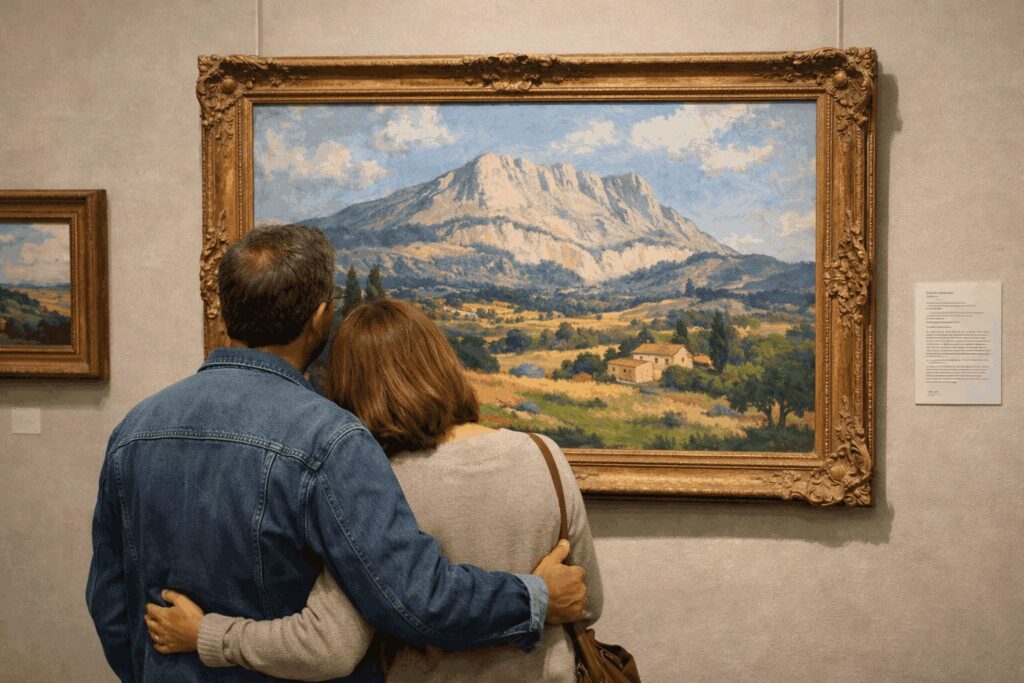
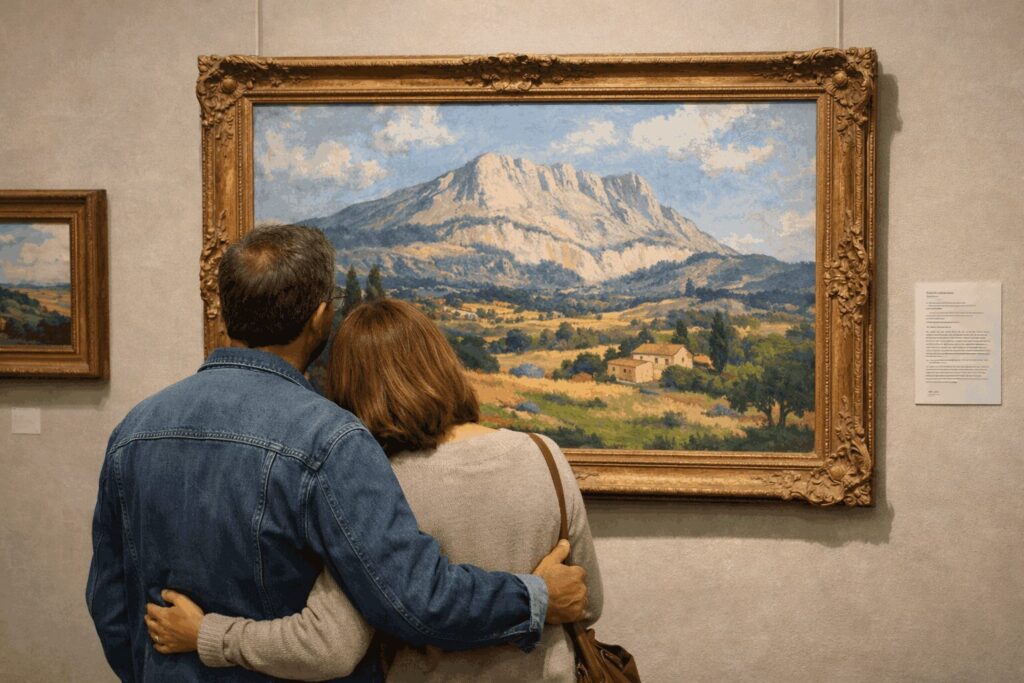
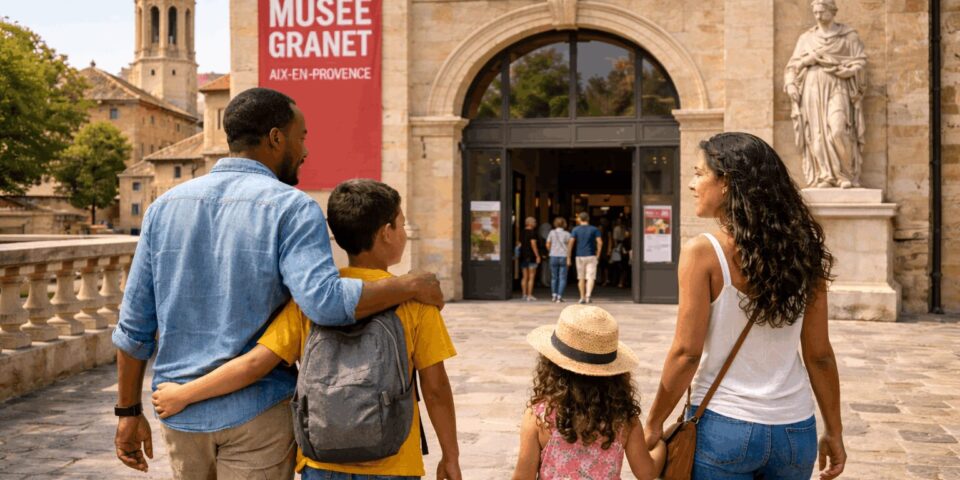
The Granet Museum🎨 is one of the must-visit cultural landmarks in the south of France 🇫🇷, located in the heart of Aix-en-Provence. It offers a fascinating journey through art history with its diverse collections. Among its major exhibitions, the one dedicated to Paul Cézanne 🖌️ holds a central place. Born in the city, this iconic artist is celebrated through his works, highlighting his influence on modern painting and his deep connection to the landscapes of Provence 🌿.
At the same time, the museum showcases Provençal art 🌞, reflecting regional traditions and identity, as well as an impressive collection of French and Italian paintings. Spanning from the Renaissance to the contemporary period, these works illustrate artistic exchanges between cultures and the evolution of styles over time ⏳. Together, these three exhibitions create a captivating and enriching experience, making the museum a must-see destination for all art lovers 🏛️.
Granet Museum Aix en Provence with a guide
19th- Century French Painting
At the Granet Museum in Aix-en-Provence 🎨, 19th-century French painting can be discovered through major artists such as François-Marius Granet and Jean-Auguste-Dominique Ingres. Their works illustrate the artistic richness of this period, balancing classical discipline with a search for new forms of expression. Granet, deeply inspired by the light and atmosphere of the South 🌞, developed a style close to the Provençal spirit, with scenes marked by calm and authenticity, while Ingres embodies the elegance and precision of Neoclassicism.
This collection is further enriched by the valuable Meyer Donation 🖼️, which broadens our understanding of French painting and its evolution. Through these works, one can also perceive the influence of the Provençal style 🌿, characterized by light, landscapes, and everyday life in the South, bringing warmth and identity to the whole. Overall, the museum offers a rich and lively panorama of 19th-century art, combining tradition, regional heritage, and artistic openness.
In the footsteps of Paul Cézanne
In the heart of Aix-en-Provence 🌿, the Musée Granet 🎨 is today paying tribute to one of its most famous sons, Paul Cézanne. Yet recognition was not immediate: at the end of the 19th century, his works were still rejected locally, while his dealer Ambroise Vollard acquired them at low prices. Ironically, these paintings are now held in the world’s greatest international collections 🌍. Since the 1980s, an ambitious cultural policy has helped reintroduce Cézanne to his hometown, finally giving him the place he deserves.
The exhibition route at the museum 🏛️ allows visitors to follow Cézanne’s artistic evolution, from his early works to his full maturity. Works such as The Large Bathers illustrate his ambition to merge the human body with the landscape 🌄. Faithful to his innovative approach, the artist structures his compositions through layers of color, blurring the boundary between drawing and painting. This constant exploration makes him a pioneer of modern art, admired by major figures such as Pablo Picasso ✨.
Among the emblematic works on display, View of the Jas de Bouffan reflects Cézanne’s deep attachment to his native Provence 🌞. Painted from the family estate, this canvas reveals his study of motif and his unique way of constructing space through directional brushstrokes. The Musée Granet, by continually enriching its collections 📚, thus offers visitors a valuable immersion into the world of the Aix-born master, between local heritage and international influence 🌍.
The sculpture gallery
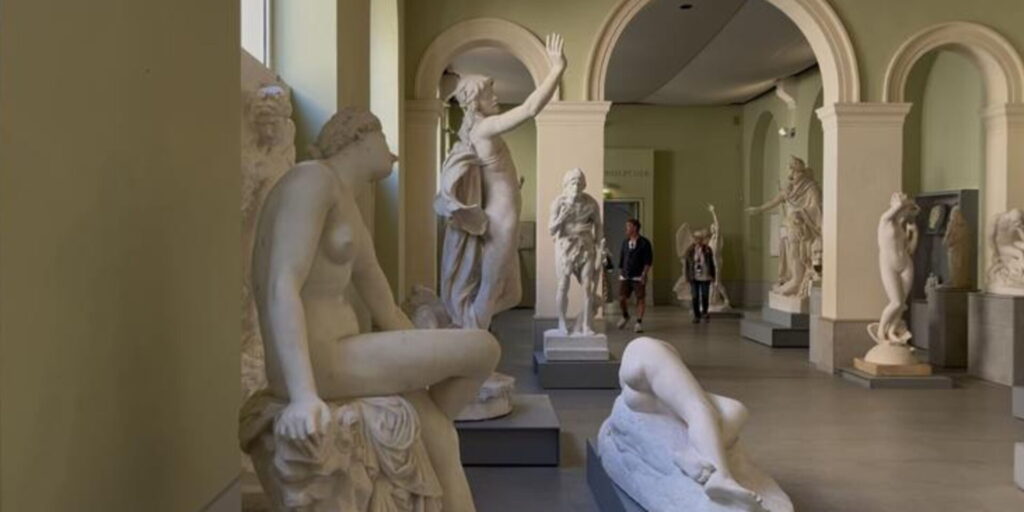
This gallery dedicated to sculpture 🗿 highlights artists from Aix in the 18th and 19th centuries, such as Jean-Pancrace Chastel. It reflects the past of the Musée Granet 🏛️ as a drawing school, where learning was based on copying models. Students notably used plaster casts and small models (modelli) for training purposes.
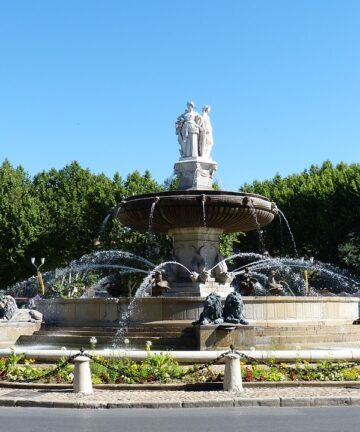
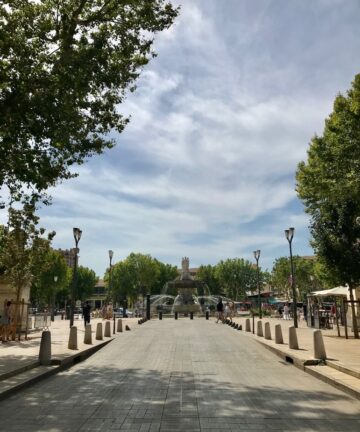
Many of these works are preparatory studies 🎨 connected to sculptures visible in the city of Aix-en-Provence, such as those at the Rotonde fountain or the Palace of Justice. They show the close link between artistic education and urban decoration.
Finally, the gallery reflects the influence of Neoclassicism ✨, with subjects inspired by Greco-Roman mythology, such as Orpheus, Perseus, or Pandora, illustrating the return to models from Antiquity.