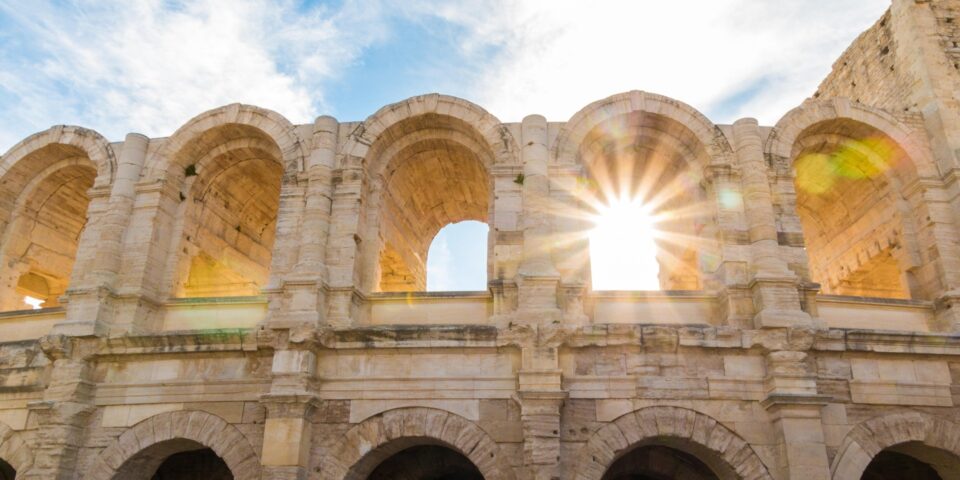
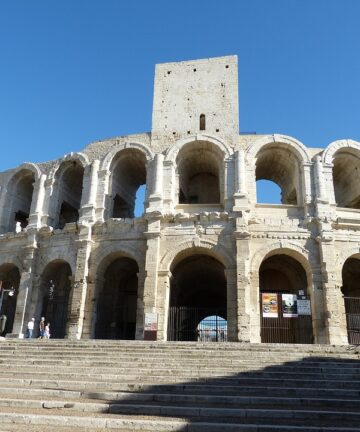
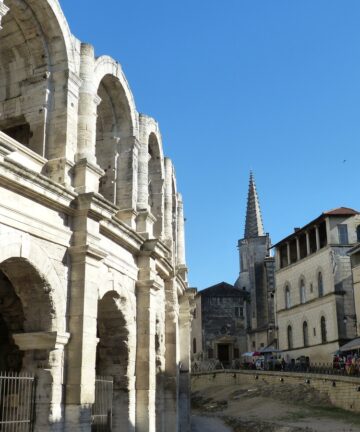
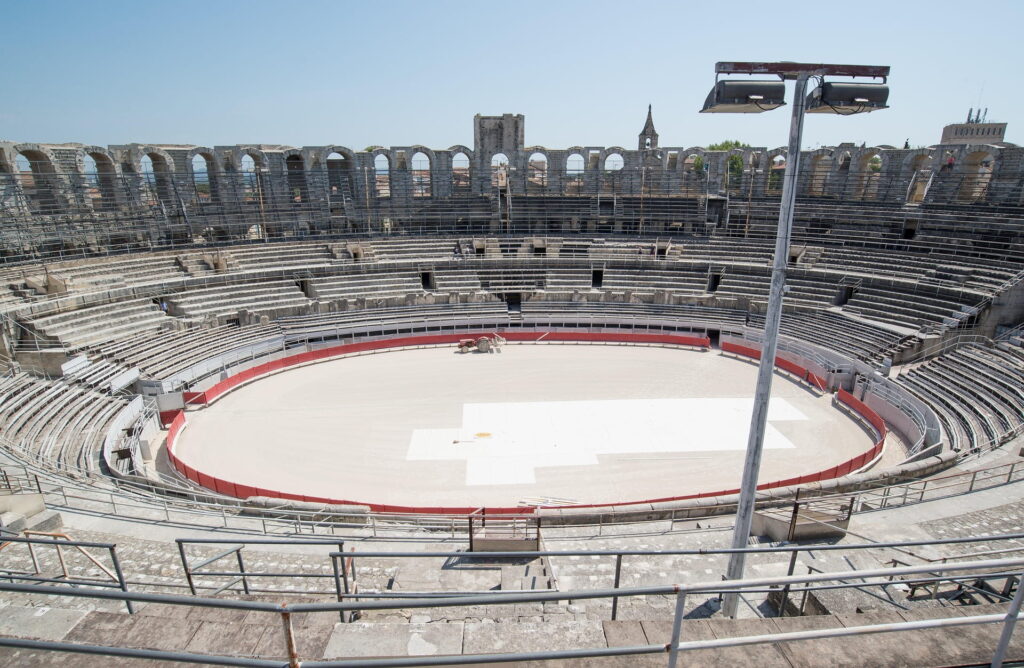
The Arles Amphitheater was built in the 1st century AD, during the reign of Augustus, shortly after the period when Julius Caesar had incorporated Gaul into the Roman Empire. It is directly inspired by the Colosseum in Rome, a symbol of imperial power, and reflects the Roman influence on the cities of the province. This Roman amphitheater could hold up to 20,000 spectators for gladiator combats, hunting shows, and other public entertainments. Its ellipsoidal structure, with tiered seating and a complex system of corridors and gates, allowed smooth circulation of spectators and animals, demonstrating the architectural ingenuity of ancient Rome.
During the Middle Ages, the enclosure was partially transformed into a fortified district, with houses and towers integrated inside the amphitheater. Restored in the 19th century, the Arles Amphitheater regained its role as a public space and became a vibrant cultural venue. Today, it hosts concerts, festivals, and events, symbolizing the continuity between ancient heritage and contemporary life in the city, while also recalling the legacy of Caesar’s Rome, which left a lasting mark on Arles.
Arles Amphitheater : a timeless venue for shows
The Arles Amphitheater was built in the 1st century AD, during the reign of Augustus, shortly after Julius Caesar had incorporated Gaul into the Roman Empire. It is directly inspired by the Colosseum in Rome, a symbol of imperial power, and reflects the Roman influence on the cities of the province. This Roman amphitheater could accommodate up to 20,000 spectators for gladiator fights, hunting shows, and other public entertainments. Its ellipsoidal structure, with tiered seating and a complex system of corridors and gates, allowed smooth movement of both spectators and animals, demonstrating the architectural ingenuity of ancient Rome.
During the Middle Ages, the amphitheater was partially transformed into a fortified district, with houses and towers integrated inside the enclosure. Restored in the 19th century, the Arles Amphitheater regained its role as a public space and became a vibrant cultural venue. Today, it hosts concerts, festivals, and events, symbolizing the continuity between ancient heritage and contemporary life in the city, while also recalling the legacy of Caesar’s Rome, which left a lasting mark on Arles.
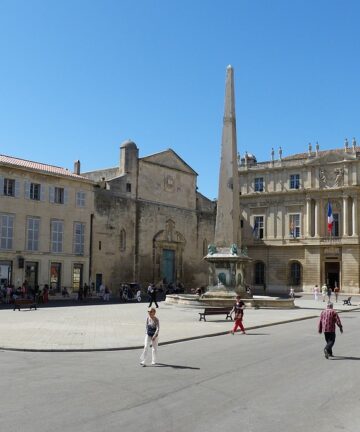
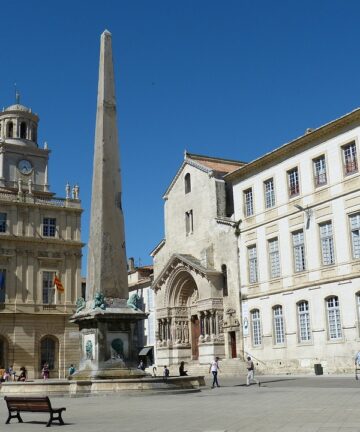
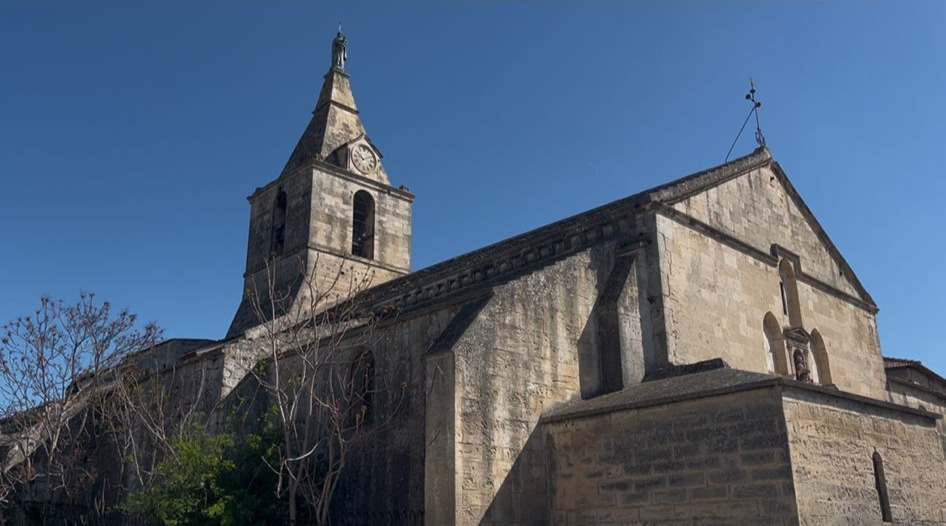
Notre-Dame-de-la-Major Church is a historic monument located in the heart of Arles, on Place de la Major. Built on the Hauture hill, it overlooks the city center and is close to the famous Arles Amphitheater. The site originated from a sanctuary consecrated as early as 452, and the construction of the current church began around 1152. It later became an important collegiate church in 1551 and suffered significant damage during the bombings of 1944 before being restored.
Its architecture reflects a blend of Romanesque and Provençal Gothic styles, featuring a three-aisled Romanesque nave and a Gothic choir complemented by side chapels. The current façade is in Louis XIII style, and the square bell tower is topped with a pyramid bearing a statue of the Virgin Mary. These different phases of construction and renovation illustrate the city’s artistic and religious evolution over the centuries.
Inside, the church houses remarkable furnishings and artworks, including a polychrome marble pulpit from the 18th century, a gilded wooden altar, and several paintings depicting religious scenes. It remains a vibrant place for the local community, particularly during the blessing of the gardians’ mounts on May 1st. Open to the public, the church is a must-visit for exploring the historic and religious heritage of Arles.
The historic city center : exploration and strolling
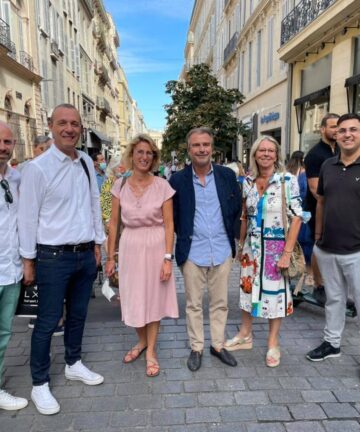
The historic center of Arles is perfect for strolling and soaking up the Provençal atmosphere. The pedestrian streets are full of small shops and art galleries, where visitors can find handcrafted goods, ceramics, textiles, and local souvenirs. Place du Forum and Place de la République are ideal spots to experience local life and admire historic architecture while enjoying the terraces of cafés.
For lovers of markets and fresh produce, the Arles market takes place mainly on Wednesday and Saturday mornings. It offers a wide variety of fruits, vegetables, cheeses, charcuterie, Provençal herbs, and honey, as well as craft stalls. It’s the perfect opportunity to taste local specialties such as tapenades, fougasse, regional olives, gardianne de taureau, and calissons, while immersing yourself in the friendly atmosphere typical of Provençal markets.
When it comes to food and dining, the center offers many options for all tastes. Restaurants like L’Oriel or L’Épicerie du Cloître serve refined Provençal cuisine, while cafés like Le Petit Arles Coffee Shop are perfect for a tasty break. For a more casual experience, places like Le Cochon Qui Fume or Le Criquet offer local dishes in a relaxed atmosphere, making them ideal for completing a visit to the historic center and discovering the traditional flavors of Arles.