The Alsace Wine Route : One of the Best Things to do in the Region
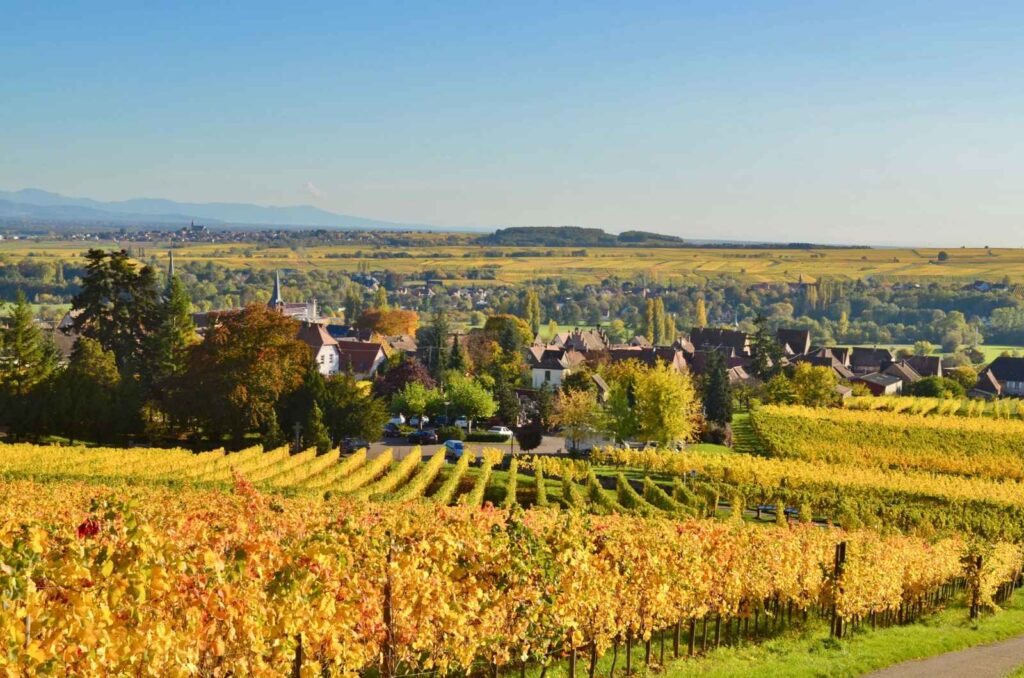
Going from the North to South through the Alsace region, the Wine Route stretches over 170 kilometres and was inaugurated in 1953. It’s one of the oldest in France and passes through 70 wine-growing villages – some of which hold the title for France’s Most Beautiful Villages.
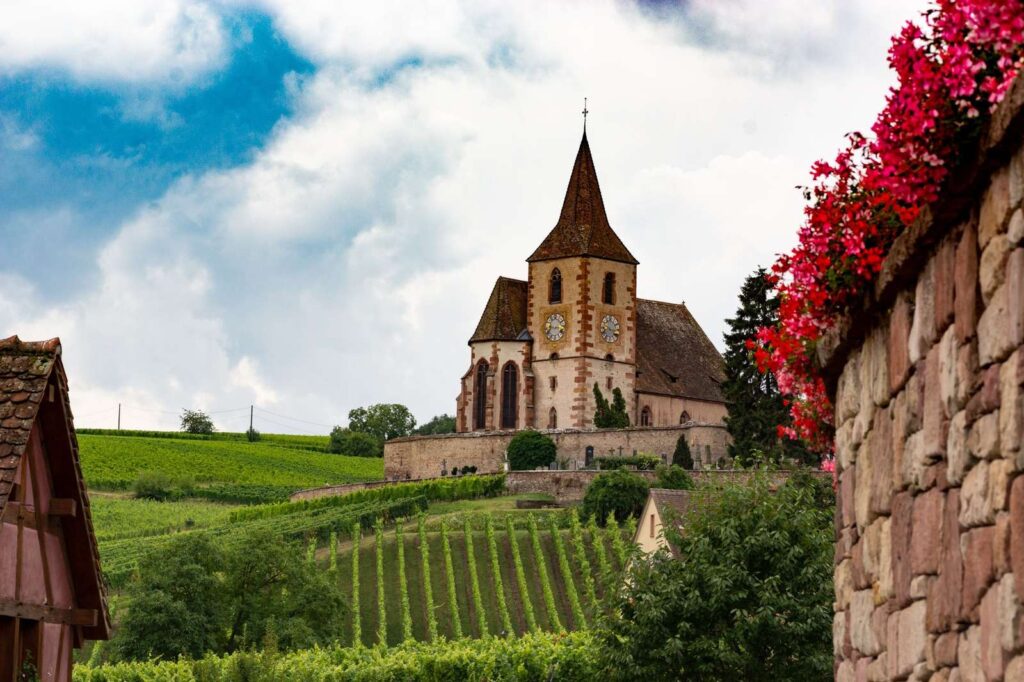
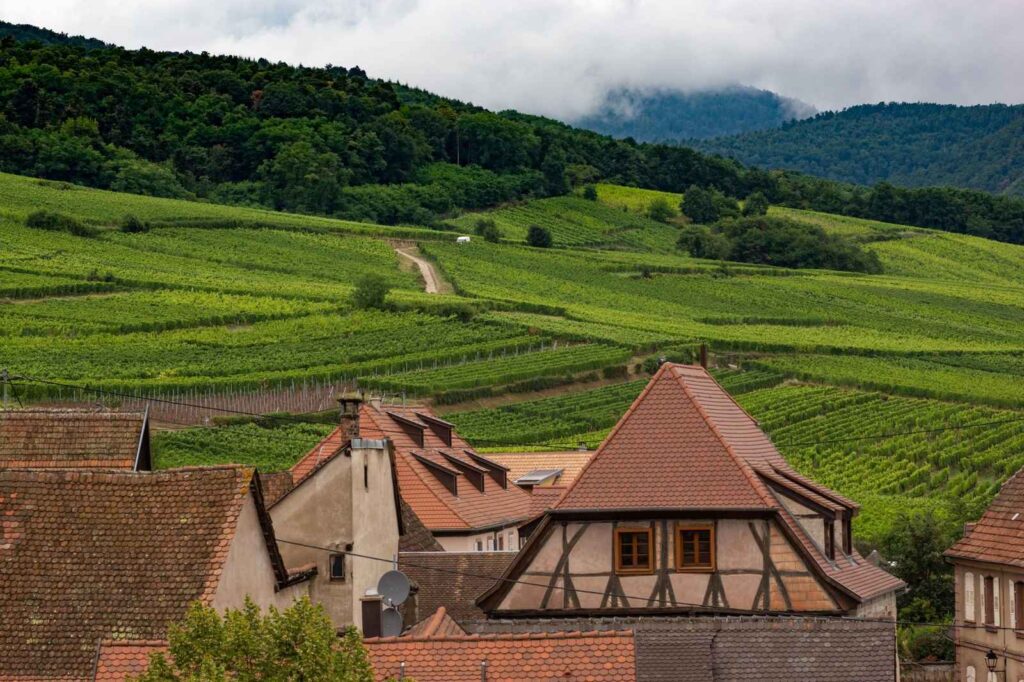
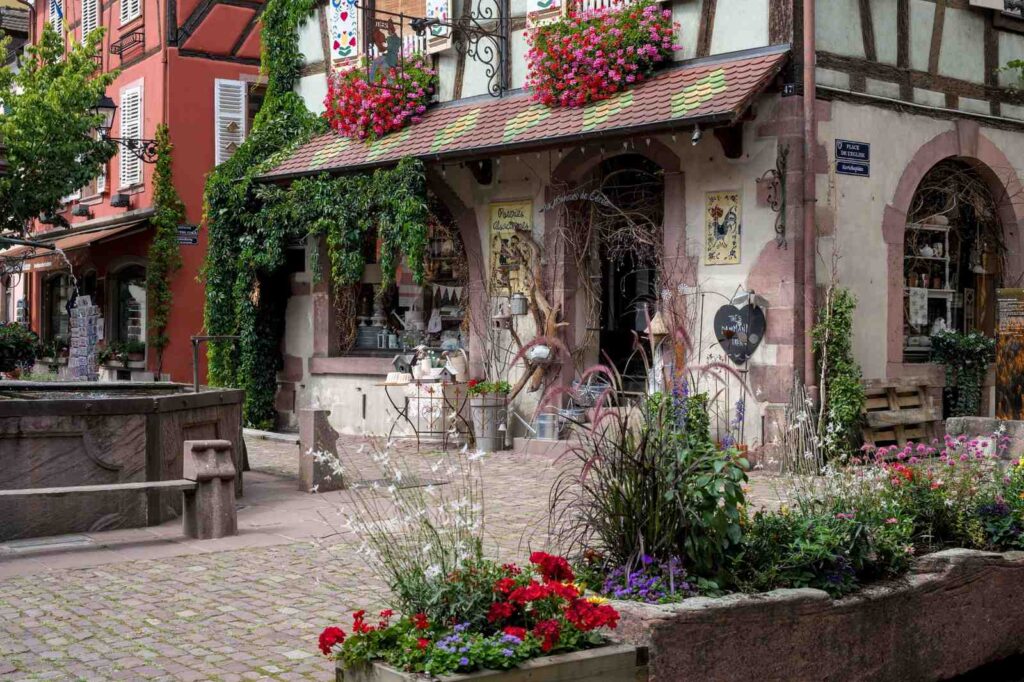
Along the way you will find not only vineyards and wine cellars but also medieval towns; ruined castles, churches and the half-timbered houses that Alsace is known for.
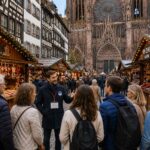
From April to October, the villages organize wine festivals and harvest celebrations, but then in the weeks leading to Christmas, they come alive with incredible Christmas markets.
The Best Landmarks and Museums on the Alsace Wine Route
Château du Haut-Kœnigsbourg (Orschwiller): The absolute crown jewel of the region. Perched high on a rocky spur, this fully restored 12th-century fortress offers an immersive look into medieval life and boasts panoramic views stretching across the Rhine Valley all the way to the German Black Forest.
Kaysersberg Castle & Fortified Bridge (Kaysersberg): The 13th-century imperial castle ruins dominate the valley. A short walk up the vineyard trail rewards you with a look inside its circular keep. Down in the village, don’t miss the 16th-century fortified bridge built from distinctive pink Vosges sandstone.
La Petite Venise (Colmar): Located in the self-proclaimed “Capital of Alsace Wines,” this deeply romantic neighborhood features colorful half-timbered houses lining the launch points of the Lauch River.
Mont Sainte-Odile (Obernai): Situated high in the Vosges Mountains above the vibrant town of Obernai, this ancient convent and sanctuary acts as a deeply spiritual site. It delivers bird’s-eye views over the entire Alsatian plain.
The Witch’s Eye (Thann): Located at the very southern terminus of the route, the ruins of Engelbourg Castle feature a massive collapsed keep that forms a perfect stone circle nicknamed “The Witch’s Eye” (L’Œil de la Sorcière), looking down on the steeply terraced Rangen vineyards.
The Musée du Vignoble et des Vins d’Alsace in Kientzheim: housed in the outbuildings of the Château de la Confrérie Saint-Étienne, find here a reconstructed wine cellar and presses which date back to 1640.
The Écomusée d’Alsace in Ungersheim: France’s largest open-air museum, with more than 80 historic Alsatian houses and farm buildings rebuilt across 97 hectares.
The Musée Unterlinden in Colmar: Find here the finest collection of Rhineland art in the region, with the 13th-century cloister and the Isenheim altarpiece, painted in 1512.
The Grape Varieties of the Alsace Wine Route
Riesling: Dry, refined, and globally esteemed as the king of Alsace wine.
Gewurztraminer: Full-bodied, intensely aromatic, and with notes of exotic fruit and spice.
Pinot Gris: Round, complex, and full-bodied.
Pinot Blanc: Light, fresh, elegant, and highly approachable.
Sylvaner: Refreshing, light, and thirst-quenching with subtle fruit notes.
Muscat d’Alsace: Intensely aromatic, tasting exactly like fresh grapes, but typically vinified dry.
Pinot Noir: The region’s only permitted red/rosé grape, producing light-bodied, cherry-forward red wines.
Crémant d’Alsace: A lively, sparkling white or rosé wine made using the traditional method, perfect as an aperitif.
How to visit the Alsace Wine Route
The best time to visit is May to October, as it offers the best weather for walking the vineyards and attending local village wine festivals. Alternatively, late November through December transforms the entire route into a winter wonderland with world-renowned Alsatian Christmas Markets.
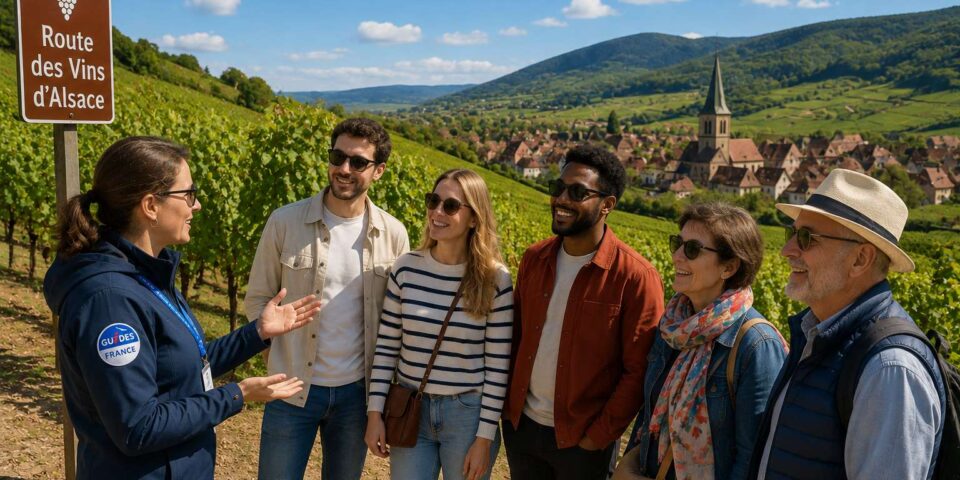
It’s a great idea to book a Private Tour Guide for a Day, to help create the perfect itinerary for you and allows you to see a lot with a small amount of time!