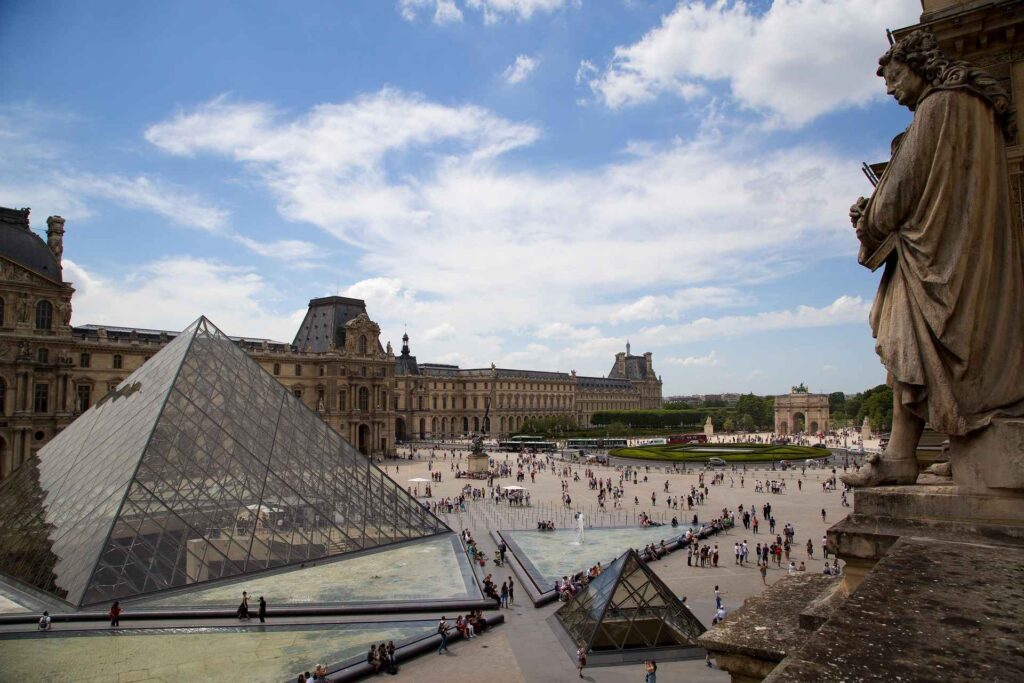
The Louvre is the world’s largest museum, and obviously one of the most visited monuments in Paris! The building itself started as a fortress in 1190 but was later converted into a royal home by King Francis I in the 16th century. It wasn’t until 1793 that the Louvre opened as a museum, by the revolutionary government.
The museum holds over 380,000 total objects and displays about 35,000 works of art. Paintings in the collection generally date before the 1848 revolution, as many newer works were moved to the closeby Musée d’Orsay on its opening.
The most famous masterpieces (the big three) include:
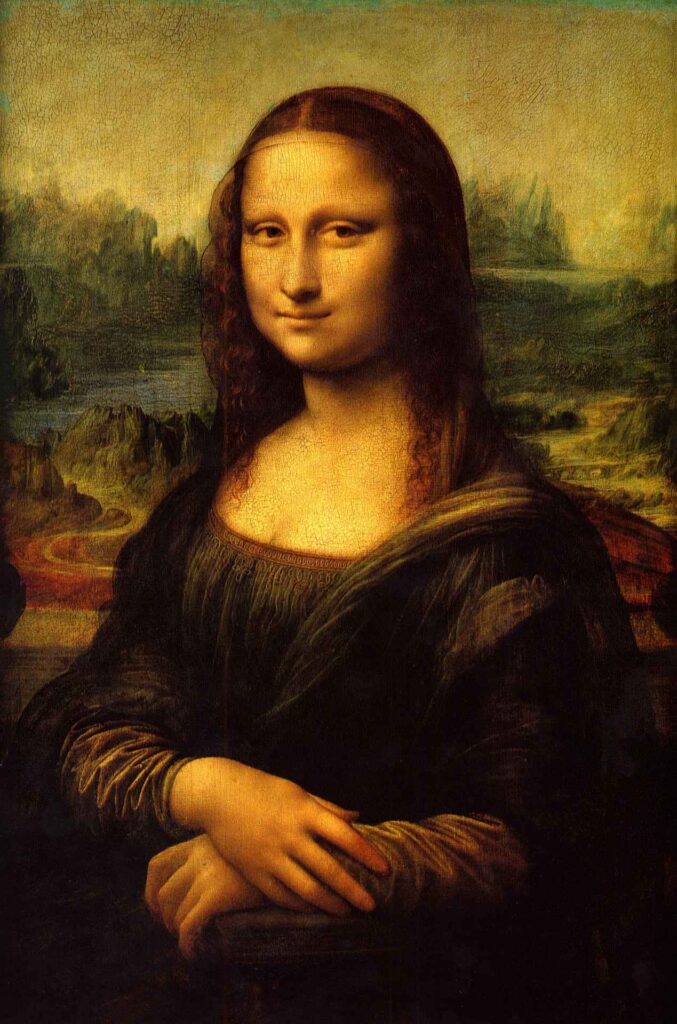
Mona Lisa by Leonardo da Vinci: A famous portrait known worldwide for its mysterious smile. It hangs in the Denon Wing behind protective glass and draws large crowds every day.
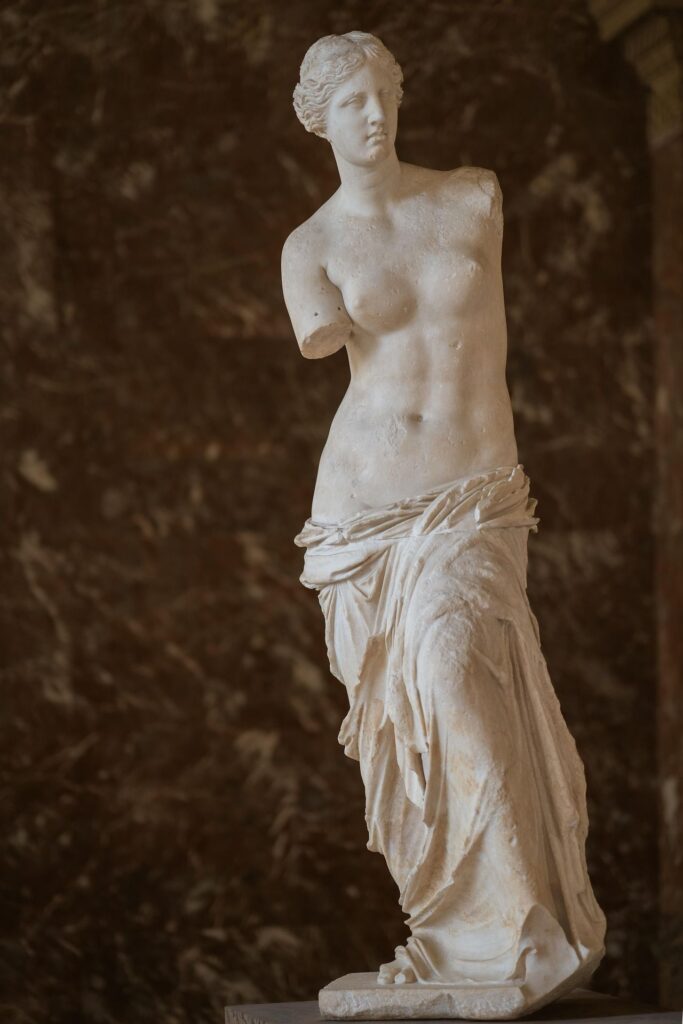
Venus de Milo: An iconic ancient Greek statue of Aphrodite, the goddess of love and beauty. Sculpted around 100 BC, it is famous for its classic elegance even though its arms are missing.
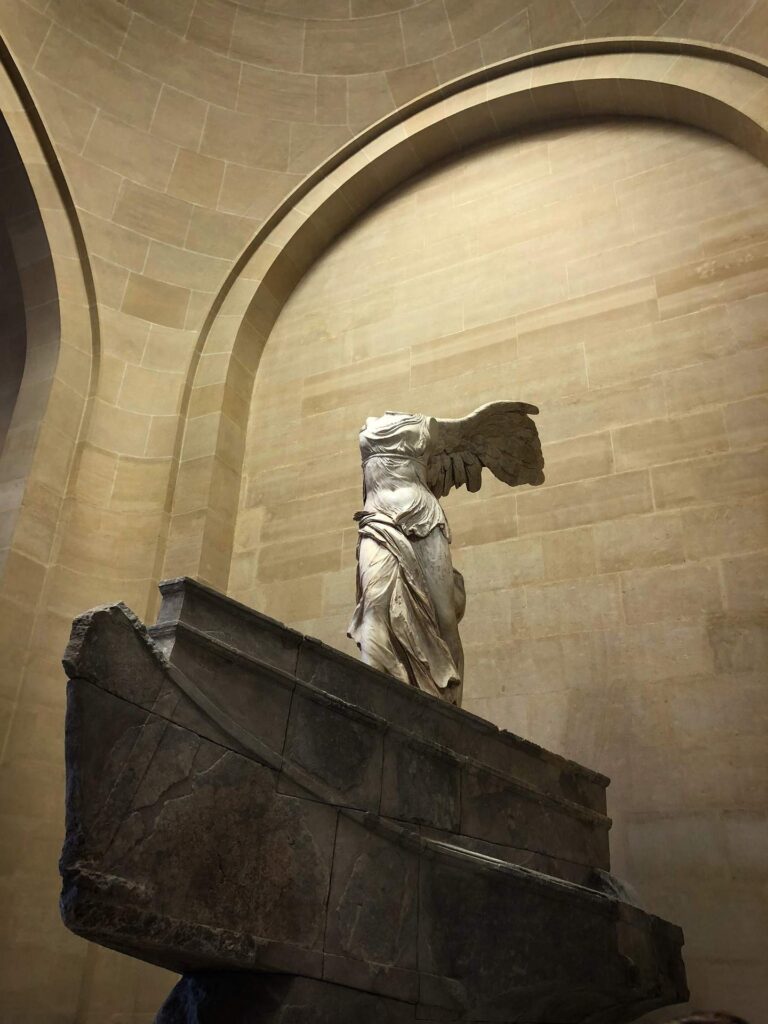
Winged Victory of Samothrace: A grand marble sculpture of the Greek goddess Nike. It stands dramatically at the top of a main staircase welcoming visitors.
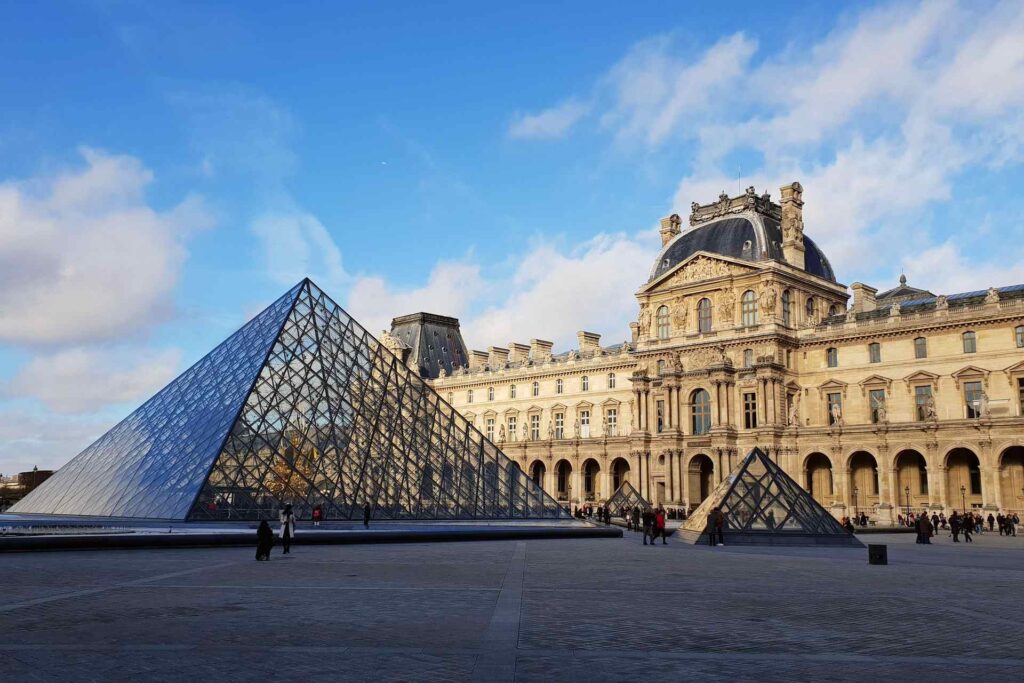
The exterior of the Louvre itself is also an icon of Paris. The main courtyard entrance features a 21-meter-tall glass pyramid designed by architect I.M. Pei, completed in 1989.
Structure of the Louvre
The Louvre has 9 curatorial departments.
Egyptian Antiquities: One of the world’s largest collections of Egyptian artifacts, including one of the largest sphinxes outside of Egypt
Near Eastern Antiquities: Ancient civilizations of the Near East (Mesopotamia, Persia, the Levant, and Arabia) spanning 6,000 years.
Greek, Etruscan, and Roman Antiquities: Mediterranean basin artifacts representing the classical world from the Neolithic to the 6th century.
Islamic Art: Works representing 1,300 years of Islamic history across three continents, hosted in the modernVisconti Courtyard space.
Sculptures: Post-classical masterworks (outside of ancient Greece, Rome, and Etruria), with a heavy focus on French, Italian, and Northern European pieces.
Decorative Arts (Objets d’art): Jewelry, tapestries, ceramics, stained glass, clocks, and furniture from the Middle Ages up to the mid-19th century (find here Napoleon’s apartments)
Paintings: Extensive collection of European paintings covering the 13th century up to 1848, including world-famous icons like the Mona Lisa.
Prints and Drawings (Arts graphiques): A massive holding of works on paper, including prints, drawings, miniatures, and illuminated manuscripts (shown in rotation).
Byzantine and Eastern Christian Art: The newest curatorial department created to highlight artistic and cultural traditions from Eastern Europe, Russia, Greece, the Middle East, and Africa.
1911 : The Mona Lisa was stolen by Vincenzo Peruggia, who had worked at the Louvre fitting glass on a selection of paintings! It was recovered 2 years later.
2025 : Making headlines all over the world, a team of thieves broke in and stole 9 pieces of 19th century imperial and royal jewellery (including diamond and jewel-encrusted crowns, necklaces and earrings worn by Empresses and Queens). The Jewels have not been found.
Outside the Louvre
Pont des Arts: This famous pedestrian bridge crosses the Seine river right near the museum and offers great views of the cit
Musée d’Orsay: Located just across the river in an old railway station, it holds a massive collection of Impressionist art.
Musée de l’Orangerie: Found at the edge of the Tuileries Garden, this spot houses Claude Monet’s giant Water Lilies murals
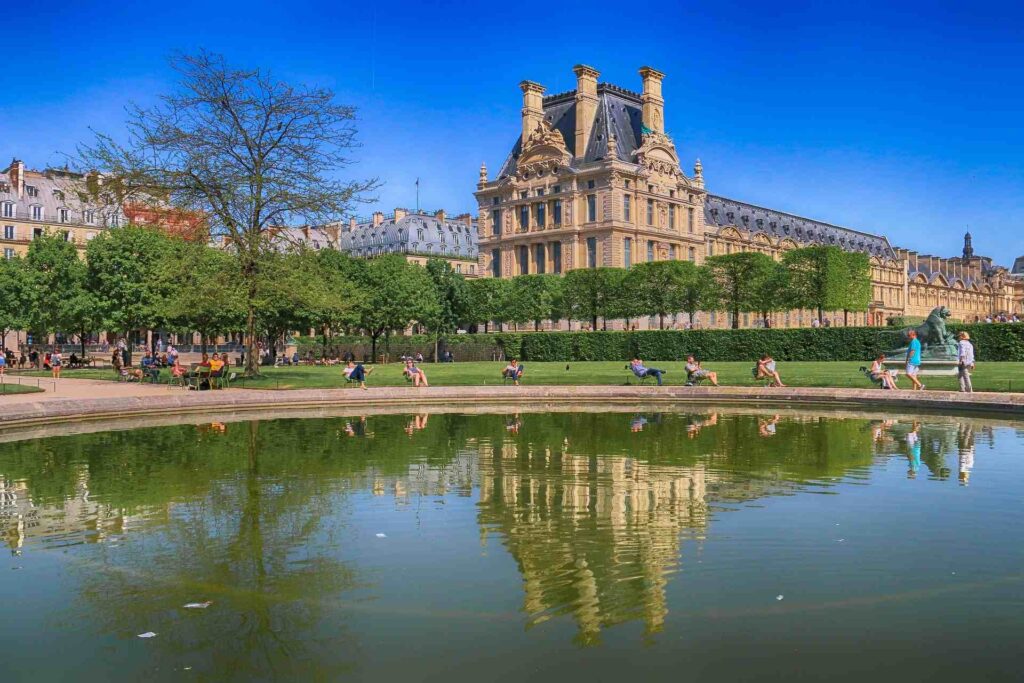
Jardin des Tuileries: This grand public park sits right outside the museum, stretching toward the Place de la Concorde with tree-lined paths and classic green chairs
Arc de Triomphe du Carrousel: This smaller triumphal arch stands right between the Louvre and the Tuileries Gardens.
Why visit the Louvre with a Tour Guide?
While the total collection actually holds over 380,000 total objects, including items kept in storage, the museum shows about 35,000 works of art spread across more than 400 rooms in its daily exhibitions.
With 30 seconds given to each work, it would take around 36 days at a rate of 8 hours per day to get every piece on display!
The Louvre is therefore something that you need to prepare an itinerary for, to see the most famous pieces, the artists that interest you or the style of art that interests you!
Booking a tour means you will have a knowledgeable guide, who can stop you from getting lost (very easy in the Louvre!), organise the perfect itinerary so you see what you want to in limited time and have all the facts and explanations ready for you, so you know what you’re looking at.