- Emeline
- Le meilleur de la France et ses régions, Provence Alpes Côte Azur, Provence Alpes Côte Azur, The best of France and its regions, The best of France and its regions, Votre guide : un professionnel investi, Your guide: a committed professional
Aix-en-Provence old town with Guides France
Book a guide !
The Old Town of Aix-en-Provence reflects the city’s rich and eventful history, shaped by centuries of architecture, trade, and culture. Its narrow, cobbled streets bear witness to its medieval past and the classical period, when the city developed around its historic center. The façades, mansions, and small squares tell the story of Aix’s evolution, from its Roman origins to its role as an administrative and cultural hub.
Walking through Old Aix means feeling the memory of the city at every street corner. The old buildings, sometimes restored, stand alongside shops and cafés, showing how the city has successfully blended history with contemporary life. Old Aix is therefore a place where one can sense the passage of time while also experiencing the daily vibrancy that continues to bring its heritage to life.
To go further: Visit of Aix-en-Provence.
Aix-en-Provence old town with Guides France
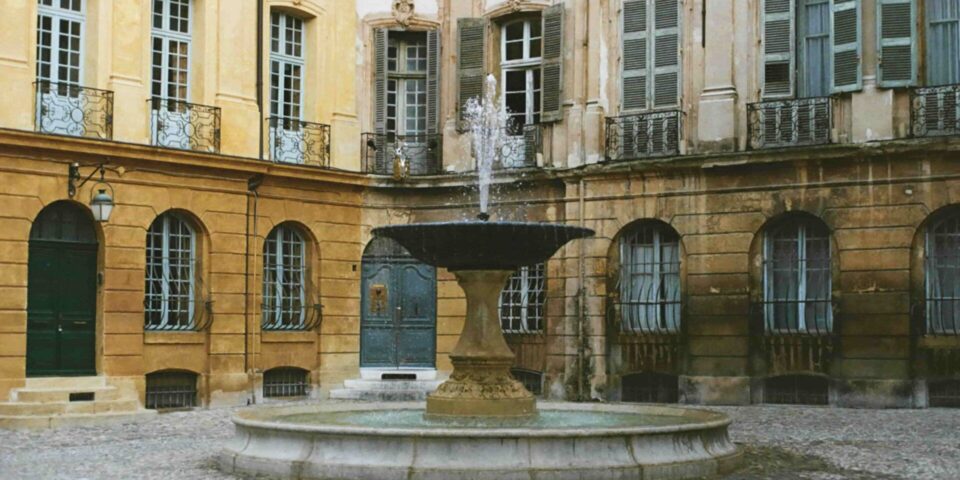
Place Albertas
The Albertas family, originally from Italy and known for its members of parliament, settled in the mansion at 10 rue Espariat, which they acquired through inheritance and marriage. In 1724, Henri Rainaud d’Albertas had the façade and entrance redesigned by the architect Laurent Vallon. His son, Georges Vallon, completed the work. The façade, in the Regency style, delicately incorporates Baroque decorations, combining elegance and lightness.
To create a beautiful perspective, the family then purchased the houses opposite the mansion and had them demolished. Jean-Baptiste d’Albertas, Henri’s son, commissioned Georges Vallon to design a square inspired by the grand squares of Paris, but with a more refined decorative style. At its center, a cast-iron fountain, created in 1912 by students of the École Nationale Supérieure d’Arts et Métiers, blends perfectly into the space.
Today, Place d’Albertas, located near the Cours Mirabeau, is a lively spot where locals, students, and visitors gather to stroll, have a coffee, or enjoy a concert. It has also served as a filming location for several movies, such as La moutarde me monte au nez, Retour chez ma mère, and Cézanne et moi.
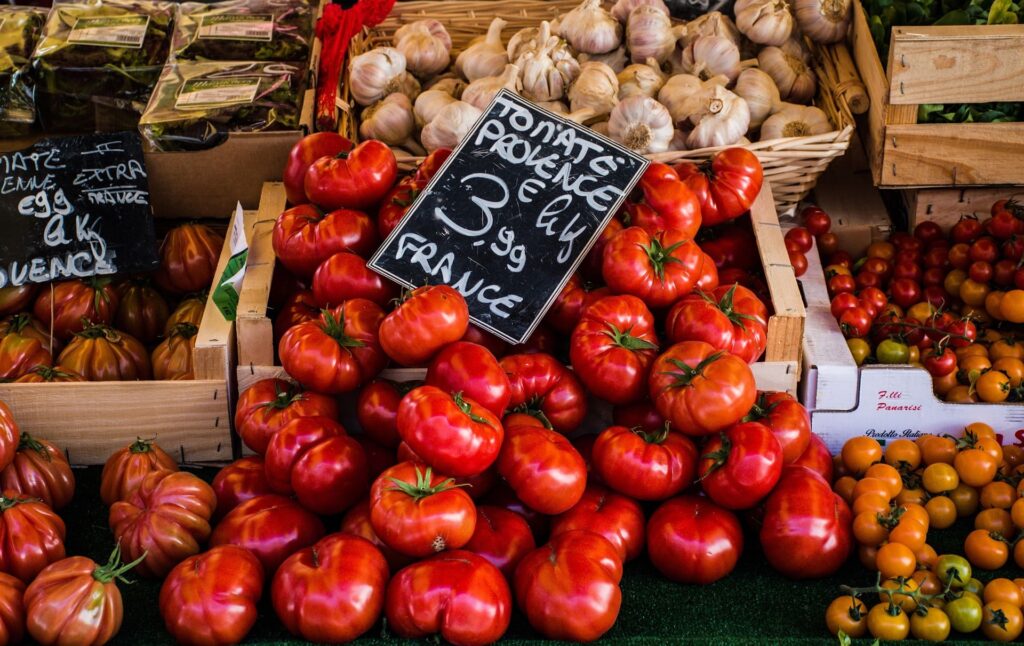
Place Richelme market
Place Richelme was once called the “Place aux Herbes” in reference to the grain market hall located nearby. Since the 14th century, it has hosted farmers and market gardeners who sell their fresh produce there every day.
Built around 1360 after the union of the Saint-Sauveur district with the city, it was located at the heart of Aix. At the end of the 15th century, René of Anjou had a chapel dedicated to Saint Sebastian built there, which was destroyed in 1618. A fish market hall was later built on the site, but it has since disappeared. The square is actually made up of two parts: the oldest, Place aux Herbes, and the Place du Marché, created in the 18th century.
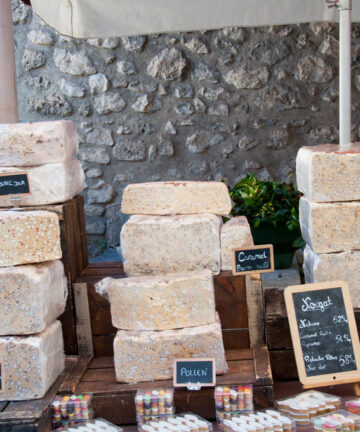
In 1930, it was renamed Place Richelme in tribute to Marie Rose Richelme, who made donations to the city. Today, the morning market remains very lively: you can find olives, cheese, honey, and fruit. Locals and visitors gather there to stroll, have a coffee, or simply watch the square come to life.
Aix-en-Provence old town : The City Hall Square
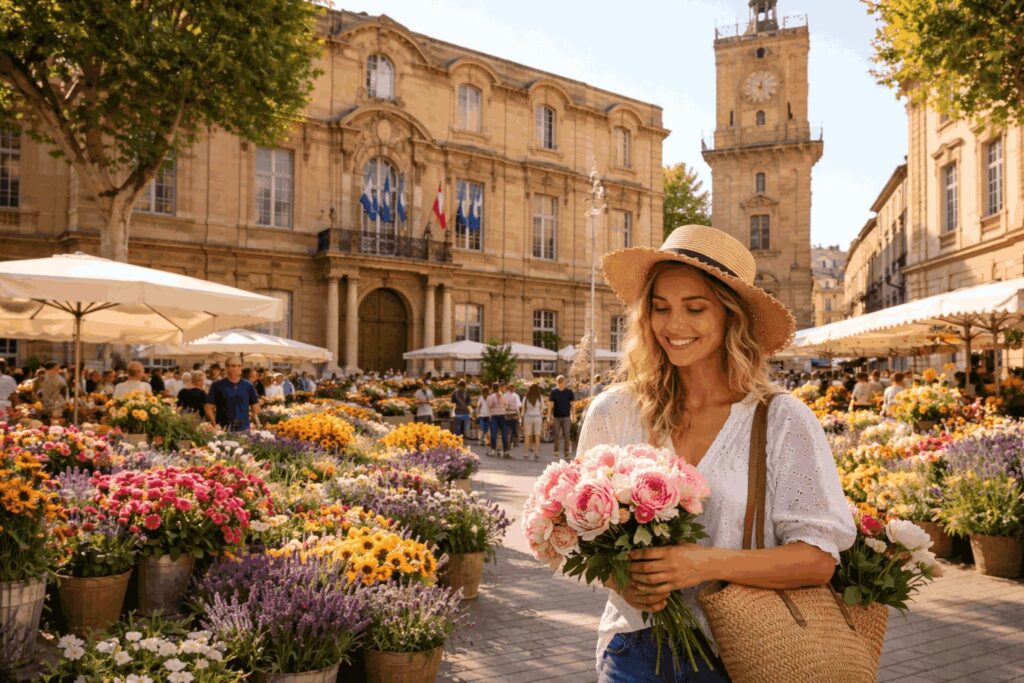
The City Hall Square is dominated by three major elements: the City Hall, its fountain, and the former grain market.
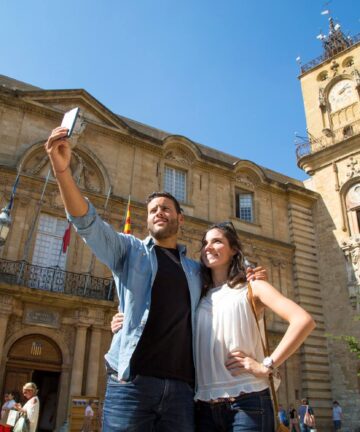
The City Hall, located at the foot of the Tour de l’Horloge since the 14th century, was rebuilt in two stages between 1655 and 1678. Its architecture, inspired by Italian palaces, was designed by Pierre Pavillon, with the assistance of sculptors Jean-Claude Rambot and Jacques Fossé. Inside, the Estates Hall of Provence houses two series of paintings: portraits of the Counts of Provence and the Kings of France, as well as scenes illustrating major historical works. The façade, once richly decorated, has lost part of its ornamentation over time and during the French Revolution.
The fountain, erected in 1755 by Jean-Pancrace Chastel, is topped by a Roman column and surrounded by a monumental design, with mascarons spouting water from the Pinchinats spring. Its imposing style makes it a central feature of the square, and it has been listed as a historic monument since 1905.
The former grain market (Halle aux grains), begun in 1754, stands between the Place de l’Hôtel de Ville and Place Richelme. Its northern façade features a central projection topped with a pediment sculpted by Chastel, representing allegories of the Rhône and the Durance surrounded by symbols of agricultural prosperity. Today, this former market hall, also listed as a historic monument, houses the municipal library and a post office counter.
The Tour de l’Horloge, attached to the City Hall, stands on a Roman base and was raised in 1510. Decorated with flamboyant Gothic elements, it contains within its 16th-century wrought-iron structure the town bell, which was once used to summon residents to council meetings or to defend the city.
Today, the square remains lively: a flower market is held on Tuesdays, Thursdays, and Saturdays, and a rare and second-hand book fair takes place on the first Sunday of each month, making this site both historic and vibrant.
To go further: Visit the Old Town of Aix-en-Provence