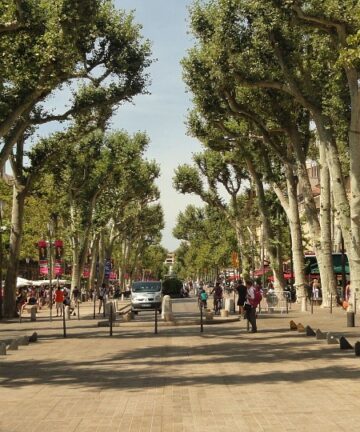
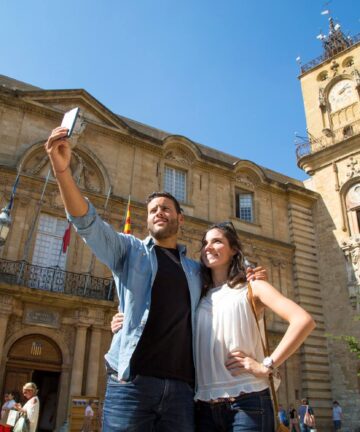
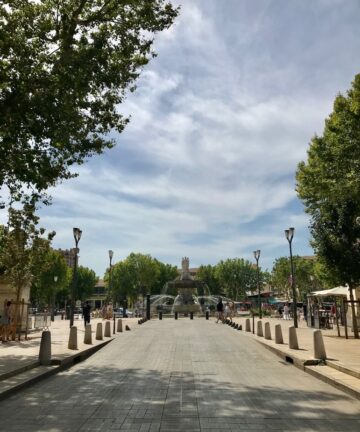
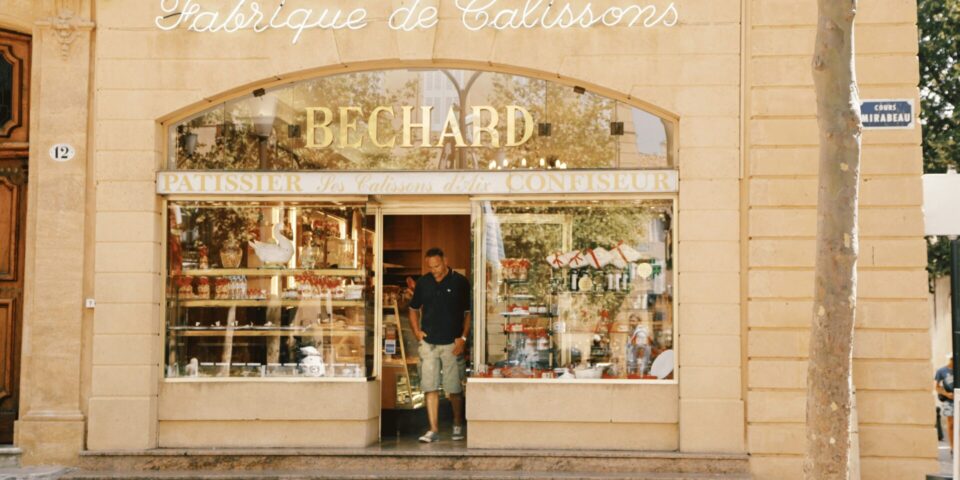
The Cours Mirabeau, the iconic thoroughfare of Aix-en-Provence, is a symbol of the city’s charm and history. Created in the 17th century with the development of the grand private mansions lining the avenue, it quickly became the favorite promenade and meeting place for the people of Aix. Its majestic plane trees and elegant fountains punctuate the walkway, bringing freshness and poetry to every step. Even today, the Cours Mirabeau remains a lively place, where historic cafés, shops, and galleries coexist with the morning Provençal market, attracting locals and visitors eager to discover regional products and craftsmanship. Between past and modernity, the Cours Mirabeau embodies the cultural and social heart of Aix.
Cours Mirabeau – Aix en Provence with Guides France
The open-air market on the Cours Mirabeauis a must-see event that attracts both locals and tourists. This market transforms this prestigious avenue into a lively space, blending history, heritage, and everyday life.
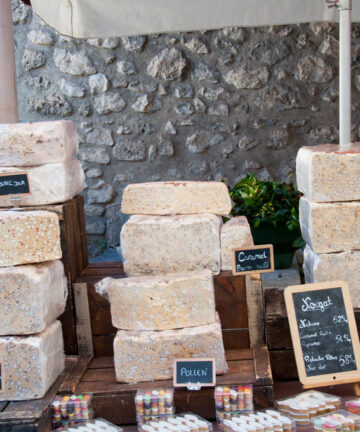
Rooted in Aix’s traditions, the market offers a wide variety of goods ranging from clothing and accessories to local crafts and beauty products. Each stall reflects the city’s diversity and cultural richness, while the friendly, festive, and warm atmosphere makes the market a true place of sharing. Visitors can find both everyday items and original souvenirs in a vibrant and authentic setting.
The market, which takes place regularly on Tuesdays, Thursdays, and Saturdays from 8 a.m. to 1 p.m., comes to life thanks to musicians, singers, and street performers who animate the Cours Mirabeau and create a festive and welcoming atmosphere. Between colorful stalls, friendly interactions, and spontaneous performances, the open-air market offers an authentic and immersive experience, reflecting all the charm and vitality of
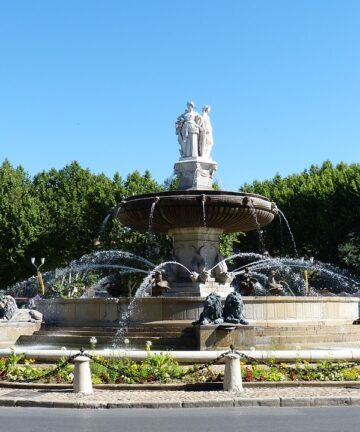
Nicknamed the “city of a thousand fountains,”Aix-en-Provence is renowned for the flowing waters that run through its streets and squares. The Cours Mirabeau, the city’s most iconic avenue, is home to four of its most famous fountains, each reflecting a part of Aix’s history.
The most impressive is undoubtedly the Fontaine de la Rotonde, built in 1860. With its monumental size and cast-iron basin, it symbolized modernity at the time. The three statues that decorate it represent the city’s main activities: Justice, facing the Cours Mirabeau; Agriculture, facing Marseille; and Fine Arts, facing Avignon. The fountain once marked the entrance to a city open to the world, without walls or gates, and it still stands today as the vibrant heart of Aix.
The Fontaine des Neuf-Canons, built in 1691 by Laurent Vallon, replaced an older watering fountain where migrating flocks once came to drink. Its water was later used by the nuns of Saint-Ursule and then by the Benedictines. Covered in vegetation, its sculptures can sometimes be hard to distinguish, but it has been listed as a historic monument since 1929. Further along the Cours, the Hot Water Fontaine, often called the “Mossy Fountain” because of its thick layer of moss, is unique as it is fed by thermal water and is also the oldest fountain on the avenue.
Finally, the Fontaine du Roi René, designed in 1819 by Pierre-Henri Révoil with a statue by David d’Angers, pays tribute to King René, a great patron of the arts and literature. He is depicted holding a bunch of Muscat grapes, which he introduced to Provence, and proudly wearing the crown of the Counts of Provence.
The Chapel of the Oblates
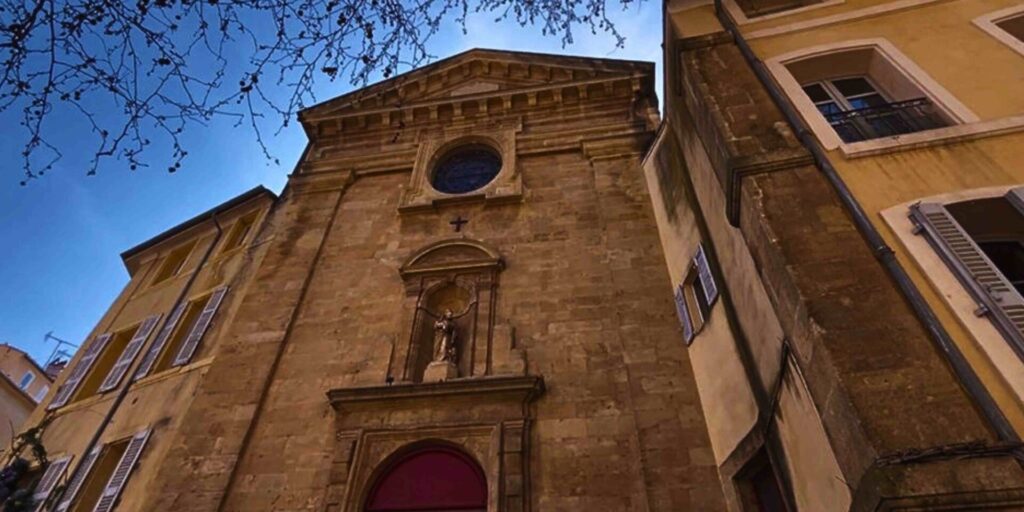
At the very top of the Cours Mirabeau hides the Chapelle des Oblats, also known as the Church of the Mission. Built between 1695 and 1701 on the site of a former Carmelite convent, its façade was redesigned in 1625 by Laurent Vallon. Featuring an elliptical dome, four oculus windows, and a lantern, it has been listed as a historic monument since 1911.
The chapel stands out for its elegant interior and remains an important site for the Missionary Oblates, who hold services and seminars there to share the charism of Eugène de Mazenod. Whether you are a believer or an art enthusiast, this site combines history, architecture, and serenity, making it a must-see in Aix-en-Provence.
Two original altar bas-reliefs, created by Thomas Veyrier, were once part of the chapel’s decoration. They are now displayed at the Musée de la Tapisserie d’Aix-en-Provence, offering a glimpse of the baroque art and ornamentation that once enriched the building.
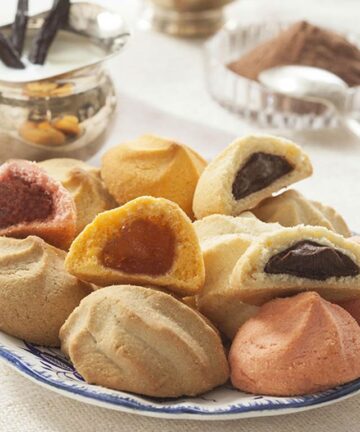
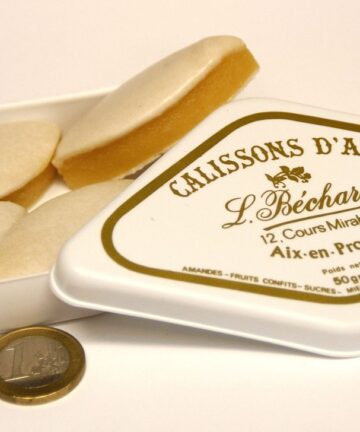
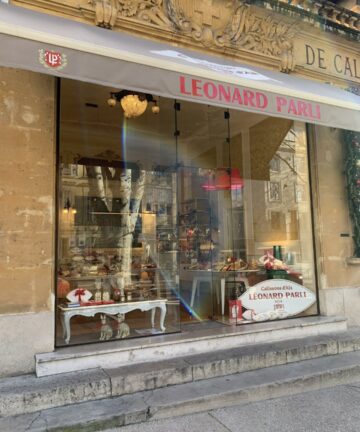
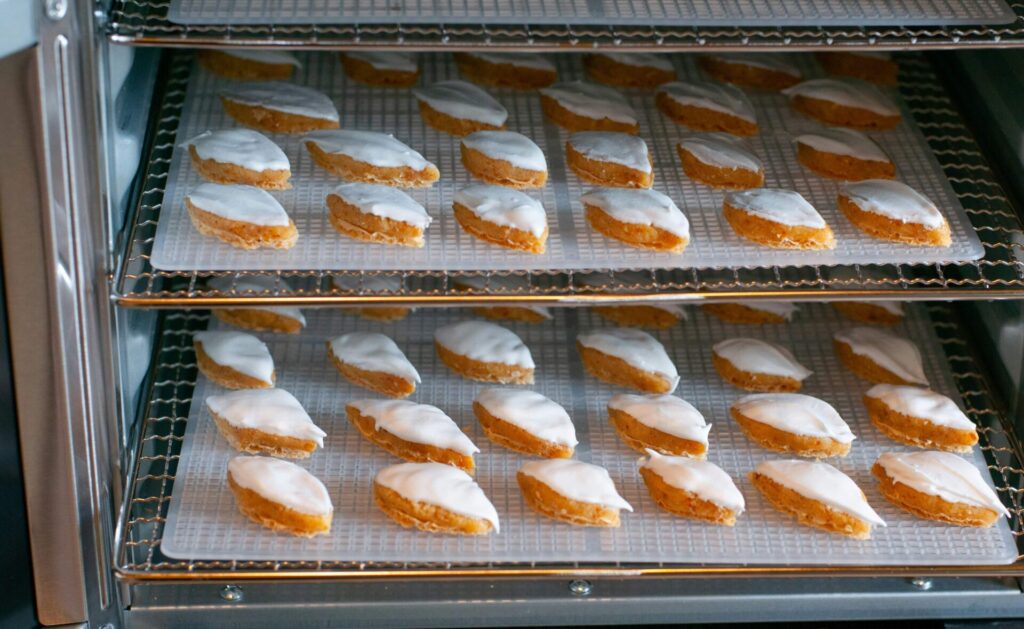
The calisson of Aix, created in 1454 to delight Queen Jeanne, is a symbol of Provence. This confection is made of finely ground almonds, candied Provençal melon, and candied orange peel, all placed on a small wafer base and covered with a white icing called royal icing. The word “calisson” comes from the Occitan language, calissoun. Shaped like a small boat, the calisson is often flavored with orange blossom and is one of the thirteen traditional desserts of Provence. It has been a specialty of Aix-en-Provence since the 15th century.
Since 1995, a special ceremony has been held each year at the Saint-Jean-de-Malte Church in Aix-en-Provence to bless the calissons. Artisans and locals gather to pray, asking for protection and prosperity for the production of this traditional confection. The blessing highlights the cultural and spiritual significance of the calisson in the city and the region.